


Your company certainly knows this. Were you provided with a safe way to get from an empty barge down to a loaded one, or vice versa? Or from the tug to a barge? If old tires were used, were they correctly located on the sides of the barges to allow you to safely transfer, or were they too high or too low on the side of the barge?
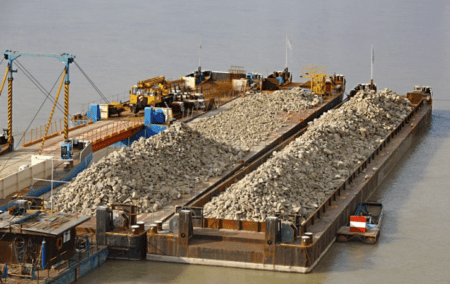
If your injury was caused by the winches on the tug or the barges, you will want to make sure they were working properly. Most deck winches on tugs are very old and have teeth and dogs that don’t properly secure the wire as you use the winch. Some older tugs have improperly mounted winches which don’t give you enough space to safely operate the winch. When barges have deck winches, these winches also have to be in good working order. Ensuring that all equipment is in good working order and free from defects is crucial to prevent accidents caused by defective equipment.
Tank barge injuries involve special issues that may not come up in dry barge claims. As a tankerman, you have to deal with a lot more barge equipment than a dry barge worker. You guys regularly handle large cross over hoses, and you have to transfer heavy hoses from barge to dock and back again, working together with the dock guys.
Machinery failure can also pose significant risks, making it essential to regularly inspect and maintain all equipment. Often the loading arms are not working correctly or are not well maintained which makes it harder to handle the hoses. Because you are transferring product, there is a risk of spills on the barge which can create a dangerous deck. There are specific Federal Regulations (‘the regs’) which apply to your barge. You can read them here. There are also lots of special reports you will want to get in your claim including the Certificates of Inspection (COIs). It is important to get all of these documents and also to hold your company to the regulations.
The barges you worked on had lots of rigging and wires on them; working with wires and rigging is one of the main things you do as a barge worker. Your company should have provided you with safe wire that didn’t have any kinks or burrs in it, and all of the ratchets and other rigging also should have been in good shape.
Even if you picked up the barge in a fleet and it already had the wires on it, many of our clients were injured while jerking on a wire that should have been taken out of service by their company. Barge workers have a dangerous job. Injured barge workers often feel like there are no options.
A kinky wire is much harder to handle than a proper wire. You also want to ask if your company had a tag out program whereby any wires in poor shape were tagged and taken out of use. This is standard practice at good companies and it is a practice supported by the American Waterways Operators. The AWO has a Responsible Carrier Program which sets out lots of rules that safe companies should follow. You can download a copy of their program here. Did your company follow all of these rules?
Another important aspect about your work as a barge worker is that you often have to rely on your captain or pilot to safely operate the tug. In many situations you have to work together with your captain or pilot as he maneuvers the tug around, and your injury may have been caused by something the captain or pilot could and should have done differently in running the tug. This includes when you guys are facing up to barges, doing rigging on barges, or when you are simply securing the lines of the tug. I know you may not want to blame your captain for your injury, but the reality is he is in charge of properly operating the tug. A lot of barge injuries occur due to improper tug operations from choosing where to have you guys transfer on and off of the barges, to working with you when you face up and secure mooring lines. All of these jobs start with the actions of your captain or pilot at the wheel.
Operator inattention can lead to serious accidents, making it crucial for the captain to remain focused and attentive at all times.
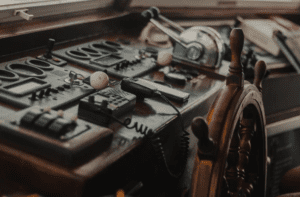 (But I was the Captain or Pilot)
What if you’re the captain or pilot of a vessel and you suffered an injury? Well, you may have been shorthanded with not enough deck crew on board, and you may have been doing deck work when you were injured. We have helped many captains whose injuries occurred when they were outside the wheelhouse performing regular tow work such as working a wench or helping to hook up a tow line. As an injured captain or pilot, one of the main issues in your claim is whether or not you can return to work.
Your company will likely push you back to work as fast as they can since you made a great deal of money as a captain. Be very careful about this. While sitting in the wheelhouse is a light duty ‘easy’ job, you have to ask yourself if you can return to being a working captain that helps the crew out, and can you even work in a vessel environment which involves unsteady surfaces, the rocking boat, transferring on and off the vessel and other physical activities.
Don’t get fooled into thinking you can do your work even with physical restrictions put on you by your doctor. All vessel workers including captains have to be able to perform heavy manual labor if necessary. Could you go out and apply for a job at a different company and get hired, even with your injury?
One final important point. As with oil rig injuries and vessel injuries, your injury on a barge may have occurred when you were doing a job ‘just like you always did it’. Many of our clients assume that this means they can’t recover what they deserve. The law says that just because you were doing a job the same way you had always done it, that does not mean it was being done safely.
In other words, don’t assume that “business as usual” means that you can’t win your claim. The standard in court is whether or not the safest available way was being used- not whether you guys always did the job the way you were doing it when you got hurt.
Getting you fair compensation is still possible even if everything may have seemed ‘normal’ to you at the time of your accident. Achieving a fair settlement is crucial to ensure that you are adequately compensated for your injuries and losses. What you don’t know can cost you a lot.
Barge workers, including those working on the Mississippi River, have specific rights under maritime law.
The Longshore and Harbor Workers’ Compensation Act (LHWCA) ensures that rights are given to all maritime workers, not just those who spend the majority of their time on the water. If you work near vessels, such as doing construction or loading cargo on the dock, you can receive compensation under LHWCA. This compensation often includes medical expenses and lost wages.
Injured barge workers who spend 30% of their time on navigable waters may be entitled to seek compensation under the Jones Act, affording them additional damages such as pain and suffering. In order to be covered under the Jones Act, the maritime worker must be able to prove that employer negligence led to their accident. This is where an experienced Jones Act lawyer comes in handy.
In cases of wrongful death, family members may be able to seek compensation under the Death on the High Seas Act (DOHSA).
It is crucial for barge workers to understand their rights and seek the advice of a maritime lawyer in the event of an accident. Barge accidents can result in severe injuries, including crush injuries and internal injuries, and may involve issues of employer negligence or unseaworthy vessels. A maritime lawyer can help determine the best course of action and ensure that injured workers or individuals receive the compensation they deserve.
 Working with a Maritime Injury Lawyer After a Barge Accident
Working with a lawyer who specializes in maritime law can be beneficial for those involved in boating accidents or barge accidents. An experienced boat accident lawyer can help injured workers or individuals navigate the complexities of maritime law and ensure they receive fair compensation for their injuries.
A maritime lawyer can provide guidance on the best course of action, including filing a claim under the Jones Act or seeking benefits under the LHWCA. A barge injury lawyer will work to provide evidence for these claims, including witness testimonies, accident reports and other documentation, and statements from experts in the maritime or medical field. It is essential to choose a law firm with experience in handling maritime injury cases to ensure the best possible outcome.
Our law firm helps you get full compensation from barge owners and other negligent parties for serious injuries from a barge accident. Medical costs are astronomical. Maritime workers and barge operators should not bear the responsibility alone. Seeking legal counsel can help ensure that your rights are protected and that you receive the compensation you deserve.
Common injuries on a barge deck can include fall accidents, injuries from heavy equipment, and incidents of falling overboard. These accidents often result from the hazardous nature of barge operations and the challenging working conditions.
The Jones Act provides legal protections for barge workers who suffer injuries due to negligence by their employer or barge owner. It allows injured workers to file personal injury claims to seek compensation for medical expenses, lost wages, and other damages.
Understanding your legal rights under the Jones Act is crucial for ensuring that you receive the compensation you deserve.
Maritime law governs the rights and duties of those working on navigable waters. It includes provisions like the Jones Act and regulations on occupational safety. Understanding these laws is crucial for successfully pursuing a personal injury claim related to barge operations.
Barge owners and operators must adhere to strict occupational safety standards. This includes providing proper emergency equipment, maintaining safe working conditions, and ensuring that all safety protocols are followed to prevent fall accidents and other injuries.
If you’ve been injured during barge operations, it’s important to seek immediate medical attention, report the injury to your supervisor, and consult with an experienced maritime lawyer. A lawyer can help you understand your rights under the Jones Act and other maritime laws, and assist you in filing a personal injury claim. Many law firms offer a free consultation to help you understand your legal options and begin the process of securing compensation.
Health administration oversees the enforcement of safety regulations on barges. They conduct inspections and ensure compliance with safety standards, helping to minimize the risk of accidents and injuries in barge operations.
A barge should be equipped with appropriate emergency equipment, such as life vests, lifebuoys, first aid kits, and fire extinguishers. This equipment is essential for preventing boating injuries and ensuring the safety of workers and responding effectively to emergencies, including incidents of falling overboard.
Yes, if your injury was caused by heavy equipment on the barge, you might be eligible to file a personal injury claim. An experienced maritime lawyer can help determine if negligence or a failure to maintain equipment properly contributed to your injury and guide you through the claims process.
The barge owner is responsible for maintaining a safe working environment and ensuring that all occupational safety regulations are followed. This includes providing adequate training, safety equipment, and maintaining the barge and its equipment to prevent accidents. If the barge owner fails to maintain a safe working environment, they can be held liable for any resulting injuries.
If you have any additional questions or need further assistance, please don’t hesitate to contact us. Our team of experienced maritime injury lawyers is here to help you navigate your legal options and secure the compensation you deserve.
Call us to talk more about your injury. Let’s see if we can help you move forward and get you what you may deserve.
400 Poydras St, Ste 2090
New Orleans, LA 70130
504-608-6308