Last Updated on April 2, 2026 by Madeleine Hollis
It’s well known that the maritime industry presents especially dangerous working conditions for offshore workers. If your loved one was hurt or fatally injured at sea, you don’t have to deal with the next steps alone.
Will Your Family Be Entitled to Death Benefits?

Yes, your family may be entitled to death benefits under the Jones Act if you are injured offshore or killed while working at sea. Although seamen can receive maintenance and cure benefits if injured, there are many other damages that they or their families can claim if they sustain injury or are killed because of employer negligence. Proving negligence is crucial for a successful claim under the Jones Act.
Working on a contingency fee basis can alleviate financial stress for clients, allowing them to focus on recovery while their attorneys handle the legal complexities. In fact, many large awards have been paid for injuries or deaths at sea.
Maritime Law and Wrongful Death Claims
Maritime law, also known as admiralty law, is a complex and specialized area of law that governs maritime activities, including shipping, navigation, and employment on vessels. The Jones Act, a federal law passed in 1920, is a crucial component of maritime law, providing protection and compensation to injured maritime workers.
If a maritime worker is killed on the job, their family may be eligible to file a wrongful death claim under the Jones Act. This type of claim allows the family of the maritime worker to pursue compensation for their loss, including funeral expenses, lost wages, and pain and suffering. Wrongful death claims can be particularly challenging, but an experienced legal team can provide the guidance and support needed to succeed.
How the Jones Act Helps Maritime Workers and Grieving Families
If you are a maritime worker, it is essential to understand your rights and options under the Jones Act. A Jones Act claim can help you receive fair compensation for injuries you’ve sustained at sea, as well as helping your loved ones pursue compensation if anything happens to you while you’re working.

If you’re the loved one of a maritime worker who has been injured or killed at sea, a Jones Act lawyer can help you navigate the legal process of receiving your rightful compensation. This includes medical bills, pain and suffering, and loss of present and future wages.
Eligibility for Benefits Under the Jones Act
To be eligible for benefits under the Jones Act, a maritime worker must be considered a “seaman” and employer negligence must have played a role in the injury.
Who counts as a seaman?
The term “seaman” refers to crew members, officers, and other employees who work on vessels, as well as offshore workers who are employed on oil rigs, platforms, or other maritime structures. To qualify as a seaman, the maritime worker must spend at least 30% of their worktime on a vessel or fleet of vessels.
For those who qualify as “seamen,” the next question is whether employer negligence was a factor in the accident. Employers are responsible for a number of safety precautions, such as:
Providing a safe work environment: Employers must take reasonable steps to protect workers from known hazards. These steps include ensuring proper equipment maintenance, addressing potential safety risks, and implementing effective safety protocols.
Providing adequate training: Maritime employers must also provide workers with the necessary training to perform their job duties safely. They must, for example, provide training on emergency procedures, the proper use of equipment, and the recognition and avoidance of potential hazards.
Ensuring proper supervision: In addition, employers must provide adequate supervision to ensure workers follow safety protocols and perform their duties safely and responsibly.
Adhering to safety regulations: Employers must comply with all applicable safety regulations, including those set forth by OSHA and USCG. These regulations include maintaining accurate records, conducting regular safety inspections, and addressing identified hazards or violations.
An experienced Jones Act attorney can help you look into different forms of negligence, and help you determine your benefit eligibility.
What’s Covered Under the Jones Act
Maritime injury benefits may include:
Medical expenses: Both current and future medical costs related to the injury, including surgeries, rehabilitation, and ongoing treatment.
Lost earnings: Compensation for the income lost during the recovery period and any reduction in earning capacity if the injury affects the maritime worker’s ability to return to their previous job.
Pain and suffering: Damages for the maritime worker’s pain and emotional and mental distress due to the injury.
Maintenance and cure: A Jones Act lawyer will also ensure the worker receives maintenance and cure. Again, these are payments for living expenses and medical care until the worker reaches maximum medical improvement.
Maritime death survivor benefits may include:
funeral expenses;
loss of companionship; and
loss of future wages.
It is up to the judge to determine how much compensation you or your family may receive after a death at sea. There is no limit to the amount of compensation, and punitive damages may also be available if willful gross negligence is found to be the cause of an injury or death.
Death on the High Seas Act (DOHSA)
If the death was caused by a “wrongful act, neglect or default occurring on the high seas beyond a marine league (3 nautical miles) from the shore of any state”, the family may recover damages under DOHSA. The family must be able to prove that the employer was negligent or at fault for the death.
DOHSA compensation is limited to pecuniary or economic damages. These damages include loss of support from past and future earnings and the loss of the value of household services. The family cannot sue for non-pecuniary damages such as loss of love and affection and any pain and suffering the seaman experienced prior to his death.
DOHSA claims often include deaths cause by a ship sinking or capsizing, fires or explosions at sea, lack of medical treatment, improper safety training, improper safety equipment or improper maintenance. DOSHA claims may also be made when a loved one dies in an airplane or helicopter crash more than 12 nautical miles from US shores.
Longshore and Harbor Workers’ Compensation Act (LHWCA)
The LHWCA covers those who usually work on shore, but are sent to perform maintenance, repairs or other tasks on a vessel or oil rig. Fault does not need to proven under the LHWCA. Just as in traditional Worker’s Compensation cases, families are eligible for survivor benefits.
Outer Continental Shelf Lands Act (OCSLA)
If the loved one was killed on an oil rig, the family may receive benefits under the OCSLA. These benefits are the same as those extended under the LHWC
Legal Guidance When Pursuing a Jones Act Claim
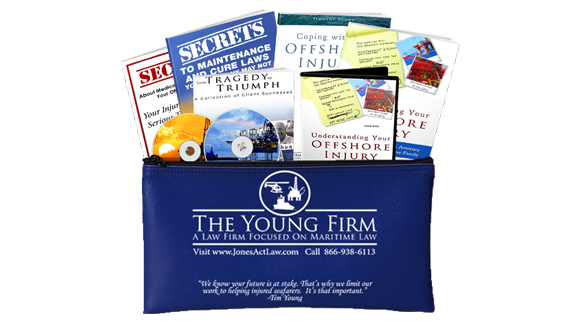
Contact a maritime personal injury attorney from The Young Firm and be sure to check out our free publications: Employee’s Guide to Maritime Injury Law and 6 Secrets Your Company May Not Tell You When You Get Injured Offshore.
If you’ve lost a loved one as a result of employer negligence, you are entitled to compensation under the Jones Act. Our Louisiana Jones Act lawyers will help you navigate the legal process so that you receive the compensation you deserve.
Contact us at 504-680-4100 for a free consultation.