If the Jones Act applies to your case, you are actually considered a “ward” of the court. This term dates back more than a hundred years and essentially means that the court has a duty to protect you and your rights.
If the Jones Act applies to your case, you are actually considered a “ward” of the court. This term dates back more than a hundred years and essentially means that the court has a duty to protect you and your rights.
Unfortunately, today this term does not carry as much weight as it used to many years ago. Nonetheless, injured seamen under the Jones Act are still technically considered wards of the court. This gives you an idea of the significant protections that the Jones Act gives to injured employees.
Basics of the Jones Act- Why Is the Jones Act so Important to You?
The Jones Act allows an injured employee to file suit directly against their employer, and collect money damages, for any of their employer’s negligence which may have caused or contributed to the employee’s injury. If your company, or your co-worker, was at fault for causing or contributing to your accident and injury, you can collect compensation from your employer for your injury and damages. This law is very different than the general rule that an employee cannot sue their employer even if the employer caused his injury.
The Jones Act allows an injured employee to file suite directly against their employer.
There are two important points to remember in regard to a suit against your employer under the Jones Act.
- In order to recover under the Jones Act, you must prove that your company or your coworkers were negligent. The Jones Act is a fault-based statute, meaning that you only collect damages if your company was at fault. This fault can take many forms including the improper or unsafe acts of your co-workers, an unsafe workplace, or unsafe or improper instructions. It is often easy to show that your injury could have been avoided if your company acted in a safer manner.
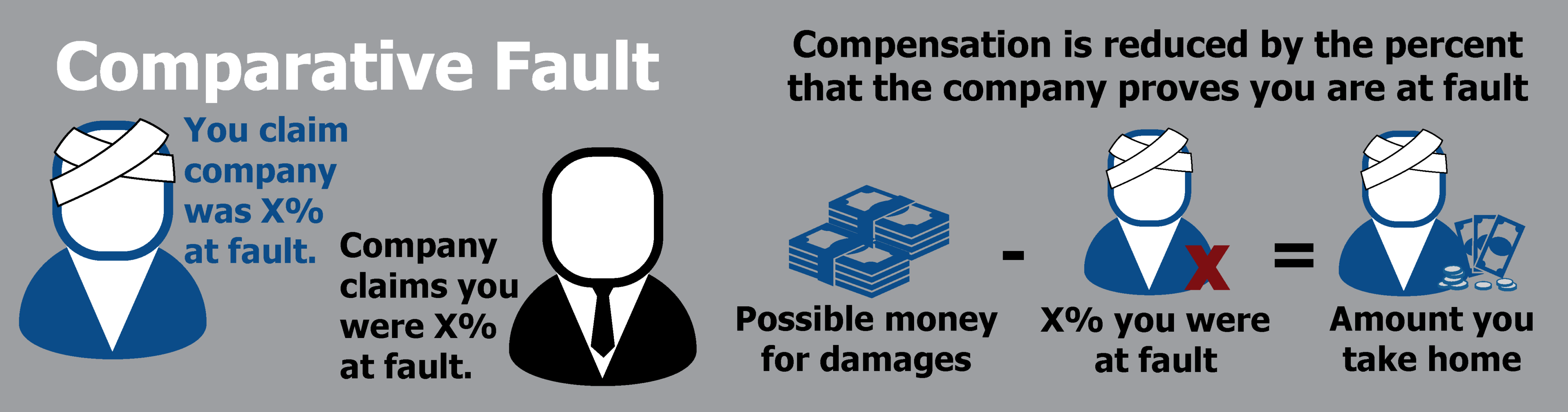
- The Jones Act allows your employer to allege and argue “comparative fault” on your part. This means that if your company can prove that you caused or contributed to your own accident and injury, this amount of fault will reduce your recovery by that percentage. For example, if your company proves through evidence and testimony that you contributed 50 percent to your own accident, any damages to which you are entitled to under the Jones Act will be reduced by 50 percent. It is critical that an injured employee understand the nature of the Jones Act in this regard.
Comparative fault is why many companies will blame a worker for their accident.
It also explains why a company will immediately take a recorded statement from the injured employee and discuss the way that the accident happened during the statement. In short, the company is simply trying to defend itself early and quickly against any type of claim that you may later file under the Jones Act.
Our office strongly encourages employees to always clearly state why their accident happened, including specifically listing any fault on the part of the company or their co-employees on the accident reports. An injured employee should also be sure to list any dangerous condition or unsafe equipment which may have caused or contributed to their accident.
The Major Differences Between Jones Act Law Cases and Regular Personal Injury Cases
- You file against your employer.
- Maritime insurance companies are involved instead of regular car insurance companies.
- The Jones Act deals with federal laws.
- Jones Act cases have a higher value.
- Jones Act cases need experts.
- Jones Act cases deal with more serious injuries.
What Should You Do Next?
We would encourage you to either learn more about your rights by requesting free informational materials or contact our office to get answers directly. You can reach us at 504-680-4100.