The New Orleans Jones Act attorneys at The Young Firm represent injured maritime workers. We maintain a legal blog about topicss that affect seamen in the Gulf Mexico and beyond. Learn more about your rights. If you've been injured while working at sea, The Young Firm has the resources to help you. Call 866-938-6113 to learn more.
If you have been injured while working offshore, it is important that you report your injury to your employer. When you report your injury, your employer is required to fill out an accident report. Learn more about the importance of accident reports. The Young Firm of New Orleans represents those who injured offshore in Louisiana, Mississippi, Texas, Arkansas and Alabama. If you think you have a maritime injury case, call our New Orleans law office at 1-866-938-6113 to schedule a free consultation with a maritime law attorney.F or more tips to help you win your offshore injury case, request our free book: “6 Secrets Your Company May Not Tell You When You Get Injured Offshore.”
The Death on the High Seas Act (DOHSA) passed in 1920 to help widows of seamen recover damages for their husband’s future earnings when deaths occurred in international waters. It now provides recovery for the death of any person that is caused by negligence or a wrongful act more than three miles from a U.S. shore. Claims may be filed by husbands, wives, parents, or children of the deceased.
Common causes for DOSHA cases include:
• Capsizing or sinking of a vessel at sea
• Fire or explosion at sea
• Inadequate maintenance or unseaworthiness
• Faulty heavy equipment
• Improper handling of cargo
• Improper training of vessel personnel
• Failure to provide prompt and/or adequate medical care in an emergency
It is important to know that claims under DOHSA can be extremely limited. Cruise ship companies and other defendants use DOHSA to their advantage to limit the damages for which they are liable. There is also a three year time limit for DOSHA suits.
Death on the High Seas Act cases and cases of wrongful maritime death can be extremely complicated. If a family member has died while at sea, there are numerous maritime laws that might be relevant. The lawyers at The Young Firm have strong backgrounds in maritime law and have successfully handled many DOHSA claims. Contact our Gulf Coast maritime lawyers at 866-938-6113 for a free consultation.
Cruise ships are meant to float us away from stresses of our everyday lives. They magically transport us and thousands of others to beautiful destinations. And on the way, cruises offer everything from rock walls and swimming pools to spas and night clubs. They are floating cities designed for fun and relaxation.
But, just as in mainland cities, there are dangers on cruise ships.
. Common Cruise Ship Hazards
•Assault by crew members or other passengers
•Food poisoning
•Sexual assault
•Slips and falls
•Trips and falls
•Water injuries
•Fire
•Illness
•Medical malpractice
Fortunately, cruise ships are regulated by maritime law and must follow regulations designed to protect the safety, security and health of passengers. If you are injured on a cruise ship, alert the crew and see a doctor right away. You should request copies of the incident report and all medical reports.
If the ship is more than three miles out to sea, cruise ship passengers are also protected under maritime law. But, there are limitations. Often, liability is limited to a very short time period following a cruise. Because the laws at sea are different from those on land, they require a lawyer with expertise in maritime law.
The attorneys at the Young Firm are experts on maritime law. If you have suffered because of negligence or safety violations while on a cruise, contact the attorneys at the The Young Firm to discuss your case.<
/div>
On August 18 a tanker carrying naphtha, a flammable light petroleum product, collided with a bulk carrier while navigating through the strait.The crash caused the tanker to catch fire, and nine missing crew members are thought to have perished in the blaze.
Sixteen other crew members were rescued by the Malaysian Maritime Enforcement Agency, but rescuers have given up hope that they will find the remaining crew alive.So far two dead bodies have been recovered.
What happened in this case?Why did two large vessels collide with one another in a well-traveled body of water?Maritime accident experts are investigating the case, trying to determine what caused the two ships to crash.
If you or someone you know is hurt in a maritime accident, it is important that you know you have rights.Don’t let your employer, the vessel owner, their insurance company, or their lawyers push you around.Sadly, many companies seem all too willing to put profits before people – but this doesn’t have to happen to you.
Want to find out how to protect yourself?Please order our FREE book “Employee’s Guide to Maritime Injury Law” – that’s right, it is completely free – so you can arm yourself with the facts.
If you’ve been injured offshore, you face not only a long recovery from your injuries and an uncertain future, but you also bear the burden of medical bills, rehabilitation costs, lost income, and basic problems like how to pay for your living expenses.
This is enough to worry about without the pressure of having to hire a lawyer to stand up for your rights.Unfortunately, if you want to be taken seriously by your employer and get the compensation you deserve after an offshore or maritime injury, you need good, experienced legal help.
The number one thing you need to look for in a maritime lawyer is experience.You will do yourself no favors if you hire a nice attorney who hasn’t handled a good number and variety of maritime / Jones Act cases.
Why does this matter?Maritime cases are governed by a murky, confusing, and convoluted set of laws that can trip up inexperienced attorneys.A good lawyer with years of experience and an impressive, proven record of successful Jones Act cases is your best bet if you want to secure a reasonable recovery.
You can read more about the qualities you want for your maritime / Jones Act lawyer in our law library article “5 Qualities Your Jones Act Maritime Lawyer Must Have”.Trust us, this is one article that you want to read before hiring an attorney.
Dock workers, shipyard workers and sailors on vessels built before 1980 may be at an increased risk of mesothelioma, a rare form of cancer linked to asbestos exposure. In fact, shipyard workers are one of the largest groups at-risk for developing asbestos-related disease; from 1990-1999, ship and boat building and repairing was the second highest occupational group of those dying from asbestos-related causes.
Before the risks of asbestos were recognized, asbestos was often used for its fire-retardant and heat-insulating properties. In ships, asbestos was used to insulate boilers, steam pipes, hot water pipes and nuclear reactors. Asbestos use on American ships has been regulated since 1980; however it continues to be an occupational hazard on older ships.
The risk of asbestos-related disease increases with heavier exposure and length of exposure. Yet, even a short period of high level exposure can cause damage. Symptoms may not appear for 20 or more years after exposure. Click to read more about asbestos, mesothelioma, and asbestos-related illness.
If you are a maritime worker who has been diagnosed with mesothelioma, time is of the essence. Contact the maritime injury attorneys at The Young Firm, 866-938-6113, for a free consultation about your rights. Our free book, Employees Guide to Maritime Injury Law, provides valuable advice for all injured maritime workers and answers commonly asked questions. As an injured maritime industry worker, you do have rights and we’d like to help.
The Gulf of Mexico is the ninth largest body of water in the world. It is bordered by five states and is of tremendous economic importance for tourism, fishing, shipping and the oil industry. This means there are thousands of American workers working in and around the Gulf of Mexico.
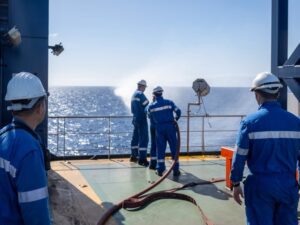
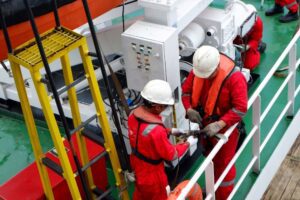
However, these jobs are dangerous. Many jobs involve heavy equipment, working on wet surfaces and working from heights. Injuries are inevitable. The U.S. Department of Labor that working at sea is second in injury only to logging. Unfortunately, many of these injuries are due to negligence or reckless behavior.
Common Maritime Injuries include
•Impact and fall injuries such as broken bones, cuts and contusions
•Back and neck injuries, including spinal cord injuries
•Head injuries and traumatic brain injuries
•Repetitive motion injuries
•Burns and chemical exposure
•Drowning
•Crushing injuries
•Diving injuries
Under the law, workers injured at sea are entitled to maintenance and cure. Maintenance includes the cost of lodging, food and monthly bills while you are injured. Cure refers to the medical expenses that are reasonable and related to the injury. Employers are obligated to pay this.
If you have been injured while working at sea due to negligence or you have not received adequate compensation, contact the Young Law Firm. Our lawyers are maritime law specialists. We will carefully evaluate your claim and help you get the compensation that you are legally entitled to.
The Coast Guard requires that maritime employers establish random drug testing programs for licensed crewmen. The Coast Guard recently issued its requirements for 2010, and in 2010, a minimum of 50% of workers must be tested. Maritime work is dangerous. When alcohol or drugs are involved, accidents can occur. If you’ve been injured offshore because a co-worker was under the influence of drugs or alcohol, you have rights to compensation under maritime law. Call the New Orleans office of The Young Firm at 866-938-6113
If you’ve been injured in an offshore accident and are unable to work because of your injuries, your employer could owe you for “maintenance and cure”.This is the money that your employer is supposed to pay you after an accident so that you can pay your living expenses and medical bills until you are able to return for work.
Maintenance – the money given to injured seamen so they can pay bills and living expenses – typically isn’t very much money.Some companies believe that $15 to $30 a day is adequate, but depending on your situation this may not be enough to cover your expenses.
Many working Jones Act seamen have bills like rent, a mortgage, utilities, transportation costs, and food to pay for – all of which would need to be covered by the maintenance compensation if they become incapacitated because of a workplace accident.If the amount their employer offers them for maintenance isn’t adequate, they may have to involve an attorney to get what they need to survive.
Cure is the money give to injured Jones Act seamen so they can pay for medical bills resulting from their injuries.Your employer is required to pay you for reasonable medical care until your condition is not likely to improve further – a point that your employer and your doctor may disagree on.
Do you have questions about an offshore injury that you sustained on a vessel or questions about maintenance and cure?Please don’t hesitate to contact the experienced maritime law and Jones Act lawyers at The Young Firm to discuss your situation.
The Discovery Channel has announced that fishing boat captain Phil Harris whose commercial fishing ventures were featured on the reality TV series “Deadliest Catch” has died. The maritime law attorneys at The Young Firm would like express our sorrow for this loss. Harris is only one of many fishermen who risk their lives every day. If you have lost a loved one at sea, you have rights. Contact the Young Firm at 866-938-6113 to learn more.