The New Orleans Jones Act attorneys at The Young Firm represent injured maritime workers. We maintain a legal blog about topicss that affect seamen in the Gulf Mexico and beyond. Learn more about your rights. If you've been injured while working at sea, The Young Firm has the resources to help you. Call 866-938-6113 to learn more.
Cruise ships are meant to float us away from stresses of our everyday lives. They magically transport us and thousands of others to beautiful destinations. And on the way, cruises offer everything from rock walls and swimming pools to spas and night clubs. They are floating cities designed for fun and relaxation.
But, just as in mainland cities, there are dangers on cruise ships.
.
Common Cruise Ship Hazards
• Assault by crew members or other passengers
• Food poisoning
• Sexual assault
• Slips and falls
• Trips and falls
• Water injuries
• Fire
• Illness
• Medical malpractice
Fortunately, cruise ships are regulated by maritime law and must follow regulations designed to protect the safety, security and health of passengers. If you are injured on a cruise ship, alert the crew and see a doctor right away. You should request copies of the incident report and all medical reports.
If the ship is more than three miles out to sea, cruise ship passengers are also protected under maritime law. But, there are limitations. Often, liability is limited to a very short time period following a cruise. Because the laws at sea are different from those on land, they require a lawyer with expertise in maritime law.
The attorneys at the Young Firm are experts on
maritime law. If you have suffered because of negligence or safety violations while on a cruise,
contact the attorneys at the The Young Firm to discuss your case.<
/div>
BREAKING NEW LAW! The United States Supreme Court recently held (June 2009) that punitive damages may be awarded against an employer for arbitrary denial or failure to pay maintenance or cure benefits. This was actually the law back prior to approximately 1993 when a Federal Court of Appeal held that punitive damages were not available. For the last 16 years we have seen dozens and dozens of clients have their medical treatment denied by their employers, mainly because there was no penalty available if the employer wrongfully denied benefits. Finally the law has been re-defined to help the employee-- this is a much needed change.
If your employer is refusing to pay maintenance or cure, call us today. This new law can help your claim!
If you have been injured while working offshore, you may not be being treated fairly by your employer. If your employer wants you to sign anything before treatment or return to work before you are healed, they are behaving unethically. At The Young Firm, we want to make sure that you get all the compensation that you are entitled to. Call us at 866-938-6113. We can help.
The
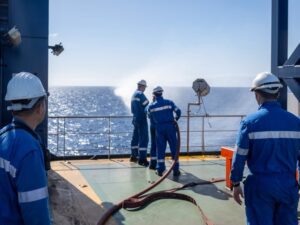
Gulf of Mexico is the ninth largest body of water in the world. It is bordered by five states and is of tremendous economic importance for tourism, fishing, shipping and the oil industry. This means there are thousands of American workers working in and around the Gulf of Mexico.
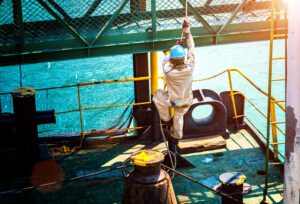
However, these jobs are dangerous. Many jobs involve heavy equipment, working on wet surfaces and working from heights. Injuries are inevitable. The
U.S. Department of Labor that working at sea is second in injury only to logging. Unfortunately, many of these injuries are due to negligence or reckless behavior.
Common Maritime Injuries include
• Impact and fall injuries such as broken bones, cuts and contusions
• Back and neck injuries, including spinal cord injuries
• Head injuries and traumatic brain injuries
• Repetitive motion injuries
• Burns and chemical exposure
• Drowning
• Crushing injuries
• Diving injuries
Under the law, workers injured at sea are entitled to
maintenance and cure. Maintenance includes the cost of lodging, food and monthly bills while you are injured. Cure refers to the medical expenses that are reasonable and related to the injury. Employers are obligated to pay this.
If you have been injured while working at sea due to negligence or you have not received adequate compensation,
contact the Young Law Firm. Our lawyers are maritime law specialists. We will carefully evaluate your claim and help you get the compensation that you are legally entitled to.
If you’ve been injured in an offshore accident and are unable to work because of your injuries, your employer could owe you for “maintenance and cure”. This is the money that your employer is supposed to pay you after an accident so that you can pay your living expenses and medical bills until you are able to return for work.
Maintenance – the money given to injured seamen so they can pay bills and living expenses – typically isn’t very much money. Some companies believe that $15 to $30 a day is adequate, but depending on your situation this may not be enough to cover your expenses.
Many working Jones Act seamen have bills like rent, a mortgage, utilities, transportation costs, and food to pay for – all of which would need to be covered by the maintenance compensation if they become incapacitated because of a workplace accident. If the amount their employer offers them for maintenance isn’t adequate, they may have to involve an attorney to get what they need to survive.
Cure is the money give to injured Jones Act seamen so they can pay for medical bills resulting from their injuries. Your employer is required to pay you for reasonable medical care until your condition is not likely to improve further – a point that your employer and your doctor may disagree on.
Do you have questions about an offshore injury that you sustained on a vessel or questions about maintenance and cure? Please don’t hesitate to contact the experienced maritime law and Jones Act lawyers at The Young Firm to discuss your situation.
Many Jones Act seamen and maritime workers did not know that asbestos fibers were used in the drilling mud on offshore oil rigs from the 1960s through the mid-1980s. Asbestos related health problems include mesothelioma, asbestosis and even a significantly higher chance of lung cancer particularly in tobacco smokers.