The New Orleans Jones Act attorneys at The Young Firm represent injured maritime workers.  We maintain a legal blog about topicss that affect seamen in the Gulf Mexico and beyond. Learn more about your rights. If you've been injured while working at sea, The Young Firm has the resources to help you.  Call 866-938-6113 to learn more.

Practice Areas

Blog

Maritime Law

Jones Act Law

Jones Act Damages

Jones Act Safety Rules

Maintenance and Cure Law

General

view more

News

Library

Maritime Law

Jones Act Law

Jones Act Damages

Jones Act Safety Rules

Maintenance and Cure Law

The Jones Act

Show Me The Law! -- Actual Cases to Help You

Newsletters

Library of Cases

General

view all

Maritime Law Blog

The New Orleans Jones Act attorneys at The Young Firm represent injured maritime workers.  We maintain a legal blog about topicss that affect seamen in the Gulf Mexico and beyond. Learn more about your rights. If you've been injured while working at sea, The Young Firm has the resources to help you.  Call 866-938-6113 to learn more.
Blog Category:

Maritime Law

9/25/2009
Timothy J. Young
Comments (0)

Hurt on a cruise ship? Cruise ships are legally responsible for passenger safety.

 
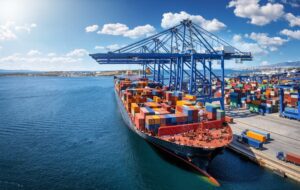
Cruise ships are meant to float us away from stresses of our everyday lives.  They magically transport us and thousands of others to beautiful destinations.  And on the way, cruises offer everything from rock walls and swimming pools to spas and night clubs.   They are floating cities designed for fun and relaxation.  
 
But, just as in mainland cities, there are dangers on cruise ships.
.   
Common Cruise Ship Hazards
 
Assault by crew members or other passengers
Food poisoning
Sexual assault
Slips and falls
Trips and falls
Water injuries
Fire
Illness
Medical malpractice
 
Fortunately, cruise ships are regulated by maritime law and must follow regulations designed to protect the safety, security and health of passengers.  If you are injured on a cruise ship, alert the crew and see a doctor right away.  You should request copies of the incident report and all medical reports.
 
If the ship is more than three miles out to sea, cruise ship passengers are also protected under maritime law.  But, there are limitations.  Often, liability is limited to a very short time period following a cruise.   Because the laws at sea are different from those on land, they require a lawyer with expertise in maritime law.
 
The attorneys at the Young Firm are experts on maritime law. If you have suffered because of negligence or safety violations while on a cruise, contact the attorneys at the The Young Firm to discuss your case.< /div>


8/25/2009
Timothy J. Young
Comments (0)

Two ships collide, crew feared dead - the dangers facing mariners on busy waters

A serious offshore accident in the Straits of Malacca highlights the dangers that maritime workers face when operating a vessel in busy waterways, either in US or international waters.


On August 18 a tanker carrying naphtha, a flammable light petroleum product, collided with a bulk carrier while navigating through the strait.  The crash caused the tanker to catch fire, and nine missing crew members are thought to have perished in the blaze.


Sixteen other crew members were rescued by the Malaysian Maritime Enforcement Agency, but rescuers have given up hope that they will find the remaining crew alive.  So far two dead bodies have been recovered.


What happened in this case?  Why did two large vessels collide with one another in a well-traveled body of water?  Maritime accident experts are investigating the case, trying to determine what caused the two ships to crash.


If you or someone you know is hurt in a maritime accident, it is important that you know you have rights.  Don’t let your employer, the vessel owner, their insurance company, or their lawyers push you around.  Sadly, many companies seem all too willing to put profits before people – but this doesn’t have to happen to you.


Want to find out how to protect yourself?  Please order our FREE book “Employee’s Guide to Maritime Injury Law” – that’s right, it is completely free – so you can arm yourself with the facts.


7/27/2009
Timothy J. Young
Comments (0)

Will sour economy affect longshoremen’s jobs – and safety?

Members of the International Longshoremen’s Association (ILA) are stunned to find themselves hurting in this economy.  Traditionally considered a business that was recession proof, the world economic slowdown is taking its toll on offshore workers across the globe.


Usually economic woes in the United States are not an issue for longshoremen.  When exports drop, usually imports pick up as Americans seek cheaper goods.  When things turn around and imports drop, exports usually rise.  In this economy both imports and exports are down, hurting shipping companies and longshoremen.


Some ship workers are seeing work hours drop by as much as a quarter, and others are facing sporadic work or layoffs.  Veteran longshoremen tend to fare better and are often offered first pick of available jobs, while less experienced longshoremen struggle to work enough hours to make ends meet.


A number used to measure the price to move materials by sea called the Baltic Dry Index reached a record high in May of 2008.  However, in December 2008 the index had dropped to its lowest point since 1986.  Not only are there fewer ships sailing, but they also contain fewer goods so it is taking less time to unload the ones that do arrive. 


The concern in a down economy is always that employers will be less careful about safety and employees – wary of biting the hand that feeds them – won’t be as forthcoming about reporting accidents, injuries, and unsafe working conditions.  In an attempt to safeguard dwindling profits, employers may also be more aggressive in fighting Jones Act and maritime law cases.


4/4/2009
Timothy J. Young
Comments (0)

If you have been injured working offshore or on the Mississippi River, you must read one of the most important articles concerning your maritime and Jones Act claim.  We have posted the 9 most important things for you to do to protect your rights.  Click here to protect your rights!

Jones Act Damages

9/25/2009
Timothy J. Young
Comments (0)

Common offshore injuries on the Gulf Coast

 
The Gulf of Mexico is the ninth largest body of water in the world.  It is bordered by five states and is of tremendous economic importance for tourism, fishing, shipping and the oil industry.  This means there are thousands of American workers working in and around the Gulf of Mexico.
 
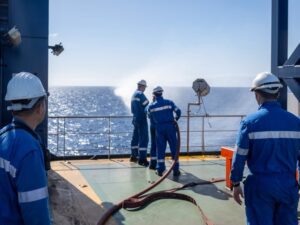
However, these jobs are dangerous.  Many jobs involve heavy equipment, working on wet surfaces and working from heights.  Injuries are inevitable.  The U.S. Department of Labor that working at sea is second in injury only to logging.   Unfortunately, many of these injuries are due to negligence or reckless behavior.
 
Common Maritime Injuries include
 
Impact and fall injuries such as broken bones, cuts and contusions
Back and neck injuries, including spinal cord injuries
Head injuries and traumatic brain injuries
Repetitive motion injuries
Burns and chemical exposure
Drowning
Crushing injuries
Diving injuries
 
Under the law, workers injured at sea are entitled to maintenance and cure.  Maintenance includes the cost of lodging, food and monthly bills while you are injured.  Cure refers to the medical expenses that are reasonable and related to the injury.  Employers are obligated to pay this.
 
If you have been injured while working at sea due to negligence or you have not received adequate compensation, contact the Young Law Firm.  Our lawyers are maritime law specialists.  We will carefully evaluate your claim and help you get the compensation that you are legally entitled to.


Bookmark and Share


Free Books

Contact Us

Name:

Phone:

Email:

Tell us more:


The Young Firm
400 Poydras Street
Suite 2090
New Orleans, Louisiana 70130
Phone: (504) 680-4100
Toll Free: (866) 660-7220

Get Directions

Video Library

FAQs

Other Links